Don’t Give Up on Basil: New Solutions for a High-Performance Garden
If you’ve ever watched a lush, fragrant basil plant go yellow and floppy seemingly overnight, there’s a good chance basil downy mildew was to blame. Since it first appeared in the United States in Florida in 2007, this disease has devastated some home gardens as it spread north and west over the years.
The good news – Between smart cultural practices and a new wave of resistant varieties — including several celebrated All-America Selections (AAS) Winners — basil lovers have more tools than ever to fight back.
What Is Basil Downy Mildew?
Basil downy mildew is caused by Peronospora belbahrii, a water mold (oomycete) rather than a true fungus. It thrives in cool, humid, and wet conditions and spreads rapidly via airborne spores. By 2015, it had made its way to most sweet basil-growing regions of the country, and it remains one of the most serious threats to the crop today.
Signs to watch for:
- Yellowing leaves typically start at the bottom of the plant
- Gray or purplish fuzzy growth on the undersides of leaves (this is the spore mass)
- Angular dark spots and distorted leaves
- Rapid leaf drop, especially in humid weather
Genovese basil — the classic Italian variety most of us grow for pesto — is highly susceptible. Once symptoms appear, the disease can progress quickly, especially when nights are cool and damp.
How to Prevent Basil Downy Mildew
Prevention is far easier than a cure. Here’s a multi-layered approach:
1. Start with resistant varieties. This is the single most effective step (more on these below). Choosing a downy mildew-resistant (DMR) cultivar dramatically reduces your risk, though it doesn’t guarantee complete immunity under extreme disease pressure.
2. Improve air circulation. Space plants generously. Crowded basil traps moisture and creates the humid microclimate that downy mildew loves. Avoid planting in low-lying, sheltered spots with poor airflow.
3. Water at the soil level. Use drip irrigation or water carefully at the base of plants rather than overhead. Keeping foliage as dry as possible removes a key condition the pathogen needs to establish. If you must use sprinklers, water early in the morning so leaves dry quickly in the sun.
4. Monitor early and remove infected plants. Check plants weekly — especially the undersides of leaves. At the first sign of infection, remove and destroy affected plants immediately. Do not compost them.
5. Consider fungicides as a backup. Both conventional and organic fungicides can be effective, but timing is everything — they work best as protectants applied before the disease arrives. Products containing copper, phosphites, or hydrogen dioxide are among those registered for basil downy mildew. Always follow label directions.
6. Stay informed. Cornell University maintains a Basil Downy Mildew monitoring website that tracks pathogen spread across the country each season. Knowing when BDM has been detected in your region can help you time plantings and spray programs accordingly.
AAS Winners to Grow with Confidence
All-America Selections (AAS) is North America’s trusted non-profit plant trialing organization. Only varieties that outperform best-in-class comparisons in independent trials earn the AAS Winner designation — making AAS recognition a reliable signal of superior garden performance.
Several basil varieties bearing this distinction are worth knowing about:
Basil Treviso
(2026 AAS National Edible – Vegetable Winner)
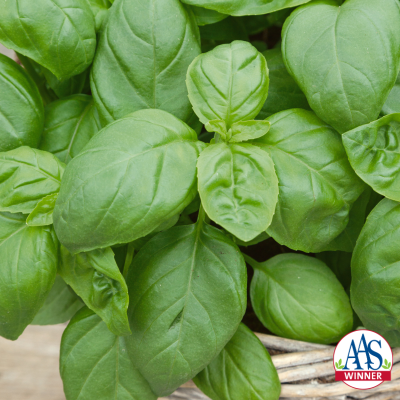
The newest basil to earn AAS honors, Treviso is a compact, highly branched kitchen garden superstar. It offers slightly anise-flavored leaves that stay tender longer than most, resisting bitterness even after multiple harvests. AAS Judges were especially impressed by its vigor, heat tolerance, and slow-to-flower habit — meaning more weeks of fresh leaf production. As a bonus, its bright foliage resists oxidation, making it ideal for fresh pesto that stays vivid green. A deliziosa choice for container gardeners and anyone who wants premium basil without the fuss.
Basil Piedmont
(2025 AAS Edible – Vegetable Winner — Regional: Great Lakes & Heartland)
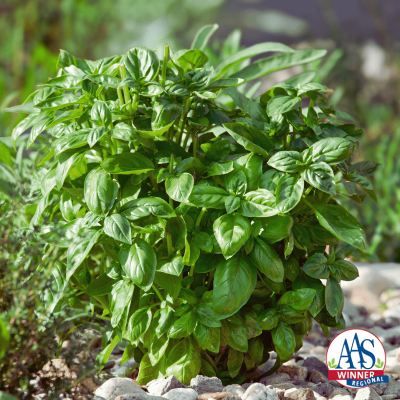
This standout variety was purpose-built for the downy mildew era. Its exceptional Downy Mildew Resistance (DMR) means healthier plants and weeks of extra harvests compared to susceptible types. Judges praised its dense, bushy habit, strong aroma, classic Genovese flavor, and shorter internodes that make it easy to manage and harvest. One trial judge wrote: “Shows excellent DM resistance, even better in late September” — high praise for a basil still going strong late in the season. If you want a reliable Genovese-style basil with serious disease protection, Piedmont is a top pick.
The Bottom Line
Basil downy mildew isn’t going away anytime soon — in fact, breeders are already working to stay ahead of new pathogen races that could eventually overcome existing resistance genes.
The most resilient strategy is a layered one:
- Choose resistant or less susceptible varieties
- Give your plants room to breathe
- Keep foliage dry
- Stay vigilant.
Whether you’re growing in containers on a city balcony or in a full kitchen garden, there’s an AAS award-winning basil variety suited to your situation — and to the realities of gardening in the downy mildew era.
“This post is provided as an educational/inspirational service of All-America Selections. Please credit and link to All-America Selections when using all or parts of this article.”