By Chase Smoak, Clemson University Cooperative Extension
Lack the space or time for a traditional garden? No worries.
You can grow tomatoes in pots and hanging baskets, too.
Follow these tips:
- Use pots that are at least 6–8 inches deep with holes underneath for drainage.
- For ease of movement, use dollies or platforms with wheels to shift plants around.
- Use a lightweight potting mix. Packaged mixes are widely available at most garden centers, but be sure to avoid soilless media that lacks the required nutrients.
- When using a potting mix with added fertilizer, wait 8–10 weeks before adding more nutrients. When it’s time, use a water-soluble fertilizer at its recommended rate.
- Choose your variety with care. For containers, I recommend these AAS-tested standouts.
Under 20″ tall
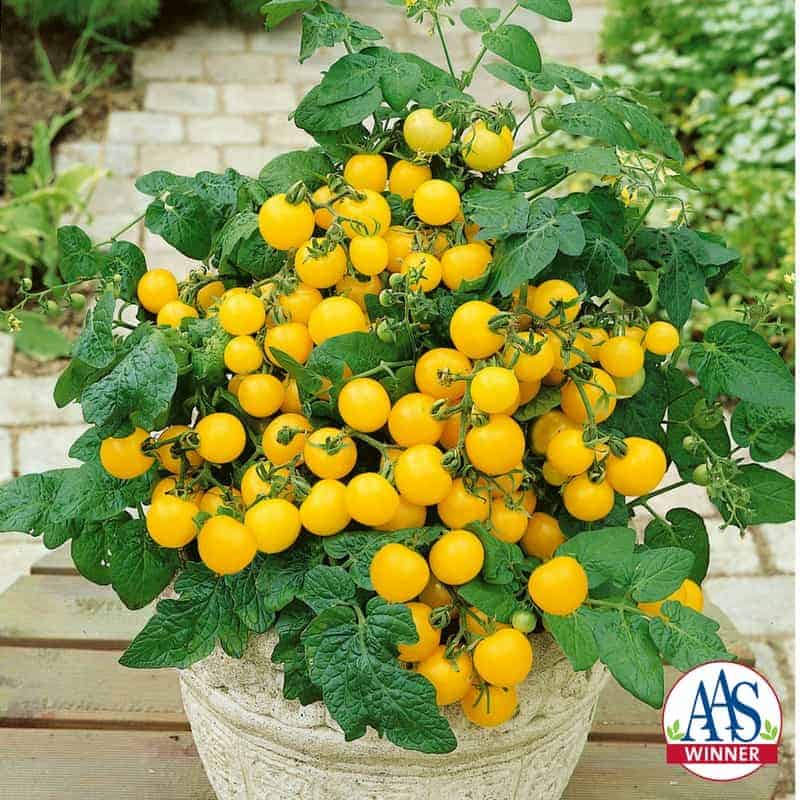
Patio Choice Yellow is a compact, determinate tomato developed specifically for small spaces and container gardens. This AAS Winner produces very large yields of 1/2 ounce bright yellow cherry tomatoes on short vines that grow only 18 inches tall.

This tomato grows 16–20 inches tall and only 20 inches wide. Lizzano produces a copious amount of fruit, which can be harvested in just 63 days after transplant. One perk of this variety is its noted resistance to late blight.
Under 24″ tall
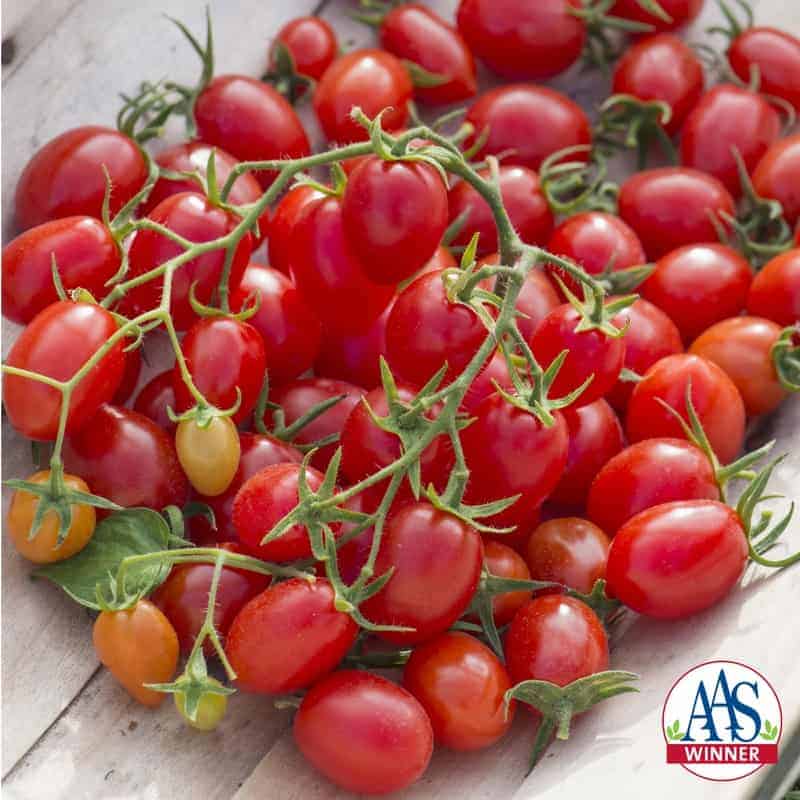
Fantastico is a must for any home gardener looking for an early-maturing, high-yielding grape tomato with built-in Late Blight Tolerance. Bred for small gardens, determinate Fantastico will work great in hanging baskets, container gardens as well as in small gardens.
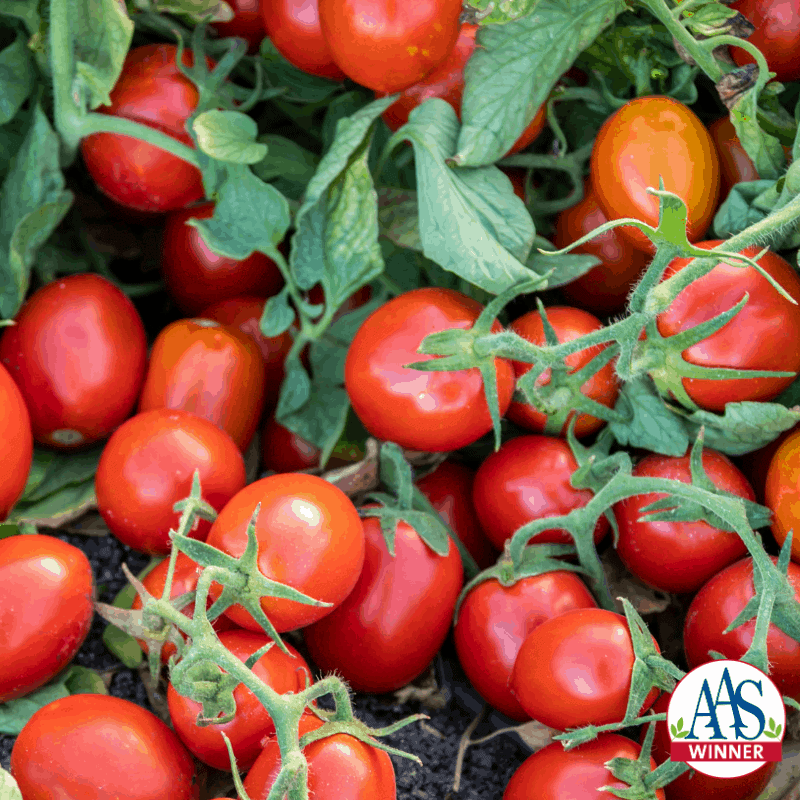
Early Resilience is a rounded Roma tomato with a deep red interior color, uniform maturity, good quality flesh, and very good resistance to Blossom End Rot. Determinate, bushy plants can be staked but it is not necessary.
36-48″ tall
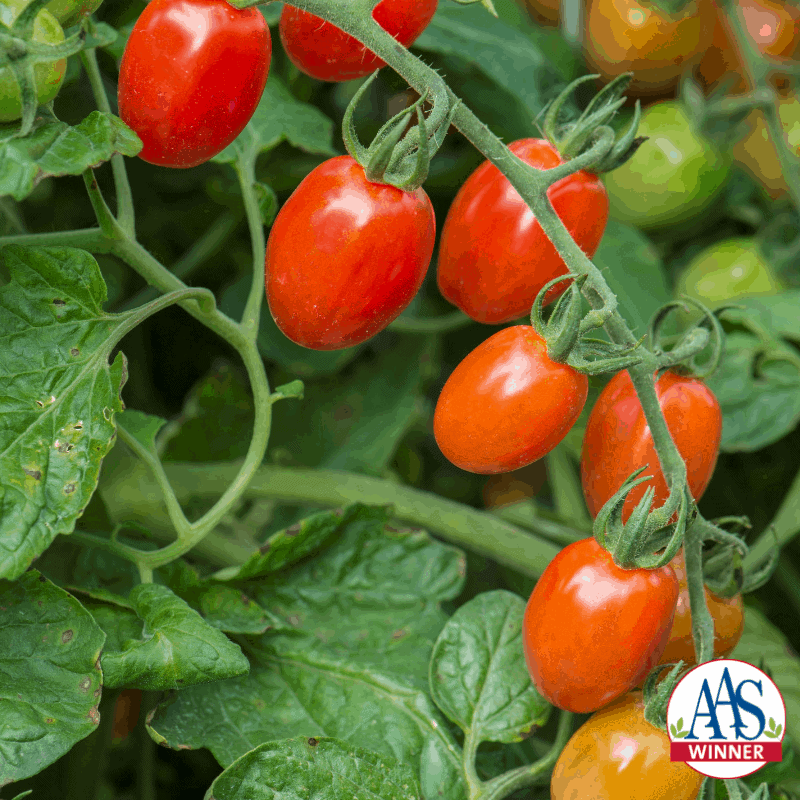
Celano is a patio-type grape tomato with a strong bushy habit that will benefit grown with some support, such as a tomato cage. This semi-determinate hybrid tomato is an early producer of sweet oblong fruits weighing about 0.6 oz. each. Plants have excellent late blight tolerance.

Red Racer, a cocktail size tomato, produced small, uniform fruits with great taste in the AAS Trials. These tomatoes are uniform in size and mature as a cluster of fruits. The compact determinate plants produced a huge yield 7-10 days earlier than the comparisons and are ideal for small spaces.
How to Stop Blossom End Rot on your Tomatoes


Blossom-end rot is the bane of every tomato gardener’s existence.
It starts as small brown spots on the blossom end of the fruit and rapidly progresses to form sizable rotten areas. While the rest of the tomato is safe to eat if you cut away the ruined portion, preventing blossom-end rot before it starts is a better strategy for gardening success.
This abiotic disorder is the result of a calcium deficiency, often caused by nutrient-poor soil or extreme fluctuations in soil moisture that interfere with calcium uptake.
Here’s how to beat Blossom End Rot before it starts…
- Add organic matter to the soil. If you are planting in raised beds or if your soil is low in natural organic matter, you may need to provide a little extra. Organic matter is simply the portion of the soil composed of living or dead things in various states of decay, such as plant roots or microbes. Gardeners can contribute to this vital soil component by incorporating organic fertilizers like compost and manure. Organic matter helps retain soil moisture and increases a plant’s ability to uptake calcium. Check the level of organic matter when testing your soil, and you won’t regret it.
- Fertilize responsibly. Shoot for a pH level of 6.5 and use lime or gypsum to maintain an appropriate calcium supply. When pH drops too low, nutrients like calcium, phosphorus, and magnesium are less available to tomato plants. Lime helps raise soil pH and is best applied several months in advance. Gypsum (calcium sulfate) is very useful when your pH level is appropriate but calcium is too low. Reach out to your local extension agent for advice on soil testing and how best to prepare the ground for tomatoes.
- Mulch the garden. Spread 2 to 3 inches of mulch around tomato plants to prevent erratic moisture shifts, but keep the mulch a palm width away from the base of plants. Failing to do so will merely shift the rot to another spot on the plant.
- Irrigate correctly. Provide tomatoes with a consistent 1 to 1.5 inches of water per week.
Fight the Blight on your Tomatoes
Know the signs and symptoms of common tomato diseases
Early Blight
Signs and symptoms: Early blight typically appears on older foliage first as small brown lesions. As spots enlarge, concentric rings form in the center of the diseased area, resembling a bulls-eye pattern. Stem lesions are similar in appearance and are capable of girdling the plant, especially those located at the soil line. On fruit, lesions maintain a similar appearance and, over time, will nearly envelop the fruit.
Prevention and treatment: Use resistant tomato varieties and pathogen-free seeds. Practice crop rotations, maintain proper soil nutrient levels and adequate plant spacing, and avoid wetting tomato foliage. Eliminate any volunteer tomatoes and weeds growing around the garden area. Apply an appropriate fungicide at the first sign of disease. For help choosing the proper fungicide, reach out to your local extension office.
Verticillium Wilt
Signs and symptoms: Early symptoms usually appear as yellow blotches on lower leaves that eventually spread upward, causing rapid yellowing of plants. Leaf veins will turn brown, and brown dead spots will appear on the leaves. Tomato foliage will eventually die and fall from the plants. Plants infected with verticillium wilt typically appear stunted in growth. Fruit will sometimes develop a yellow coloration and experience a decrease in yield.
Prevention and treatment: Use resistant tomato varieties and practice proper crop rotations. Verticillium is a soil-borne fungal pathogen. Remove all debris from infected plants out of the garden. Plants infected with this pathogen cannot be saved, so avoidance is the best option.
Late Blight
Signs and symptoms: Late blight is a serious disease that worsens during periods of cool, wet weather. The first signs of late blight are green to dark lesions with a water-soaked appearance that forms on leaves. Lesions rapidly shift to brown coloration as the disease progresses. As the leaf spots enlarge, a white-colored mold will form around the margins of the spots on the underside of the leaves. Often, total leaf drop can occur within 14 days of symptom onset. Tomato fruit will develop shiny, leathery-brown lesions. During wet weather, the entire fruit may become covered by a white, fuzzy growth.
Prevention and treatment: Choose late blight-resistance varieties and certified disease-free seeds. When possible, site your garden where it will receive morning sun and avoid using overhead irrigation. Avoid using compost containing rotten, store-bought potatoes in your garden. Maintain proper spacing between plants, remove any volunteer tomato or potato plants, and eliminate neighboring weeds. If warranted, fungicide treatments can be used. For help selecting the right fungicide treatment, contact your local extension office.
Chase Smoak is a Clemson University Cooperative Extension agent who specializes in plant propagation. He writes gardening columns for multiple publications and frequently appears on South Carolina Educational Television’s award-winning program “Making It Grow.”