Let AAS Winners Guide You
Every spring, gardeners face the same delightful problem: standing in front of a wall of seed packets or trays of plants, overwhelmed by choice. Big or small? Red or striped? Container or garden bed? The good news is you don’t have to figure it out alone.
All-America Selections (AAS) has trialed each winning tomato for superior taste, disease resistance, and superior qualities compared to existing varieties. When you grow an AAS winning tomato, the proof is in the plant.
Look here for a list of common (and a few not-so-common) terms that you will see when purchasing your seeds and plants.
What Is AAS — and Why Should You Trust Them?
AAS Winners are reliable, non-GMO varieties with proven superior garden performance trialed in AAS trial grounds across North America. Each year, a few select winners are chosen by an expert panel of independent judges who evaluate based on improvements across several criteria, such as earliness to bloom or harvest, disease resistance, yield, length of harvest, color, flavor, and overall performance. Think of it as the gold-standard vetting system for your garden.
4 Steps to Grow The Best Tomatoes



Step 1: Choose Your Fruit Size
The first question to ask yourself when selecting your tomato variety is: What do I actually want to eat?
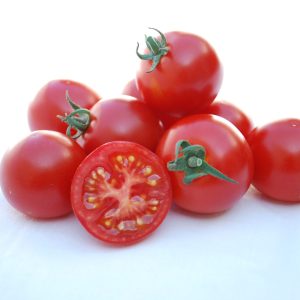
From smallest to largest, popular fruit shapes include currant, cherry, grape, cocktail (or saladette),
plum, standard/slicer, and beefsteak.
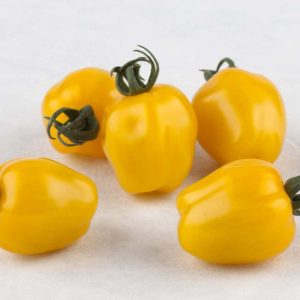
- Cherry/Currant/Grape — These are your dedicated snacking tomatoes, perfect for popping straight off the vine or tossing into fresh summer salads! You have incredible AAS Winners to choose from, such as the productive, grape-sized Celano F1, and Valentine F1, both of which hold up especially well in summer heat. There is a suite of AAS Winning cherry-size varieties, including Sparky XSL F1, Crokini F1, BadaBing! F1, and Fire Fly F1. Or give Candyland Red a try, the first currant-type AAS Winner. For high-impact color, try Purple Zebra F1, which features dark red fruit with green stripes and a mahogany interior, or the gorgeous indigo Midnight Snack F1 that deepens in hue as it ripens in the sun. If you’re looking for something truly unique, the apple-shaped Apple Yellow F1 offers a deliciously sweet, citrusy taste and a firm, meaty texture that is absolutely perfect for stuffing with savory cheeses.
- Saladette/cocktail — Two- to three-bite saladettes such as Red Racer F1, Red Torch F1, and Juliet are larger than cherry but often smaller than plum tomatoes. Juliet is an AAS classic that produces elongated, grape-like clusters on vigorous vines. Red Racer F1 is “small in size but big in taste!” said one AAS Judge, and Red Torch F1 has a combination of excellent flavor, great texture, and high yields
- Plum & Roma — If you love to cook, can, or make sauce, look no further. Zenzei F1 is a standout, rounded Roma tomato featuring a deep red interior, uniform maturity, and high-quality flesh for canning and cooking. AAS judges raved about its powerful disease-resistance package, which is designed to help gardeners be more successful than ever before. For a splash of color, Sunset Torch F1 offers gorgeous, sunset-hued plum-shaped fruits that grow on easy-to-harvest trusses.
- Beefsteak/Slicers — For showstopping tomatoes, the Chef’s Choice series (Bicolor F1, Black F1, Red F1, Yellow F1, Green F1, Pink F1, Orange F1) and Mountain Rouge F1 deliver the goods. Pink Delicious F1 is a pink beefsteak tomato that promises meaty 11-ounce fruits that are sweet-tasting and crack-resistant, with judges noting “definitely a winner for an heirloom-looking tomato but with all the benefits of a hybrid.” Buffalosun F1 has all that an heirloom has to offer, but better!
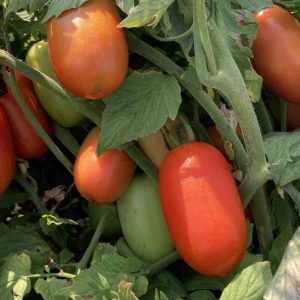
Zenzei F1
Plum
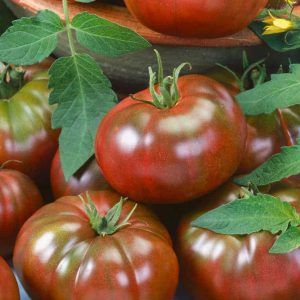
Chef’s Choice Black F1
Beefsteak/Sliders
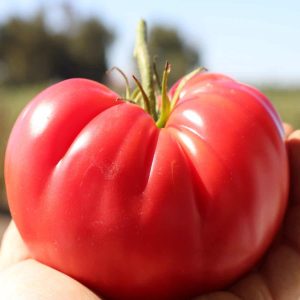
Pink Delicious F1
Beefsteak/sliders
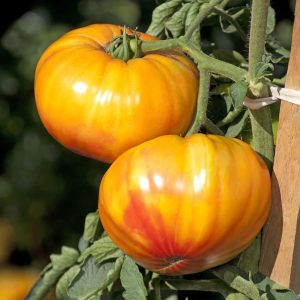
Buffalosun F1
Beefsteak/sliders
Step 2: Pick Your Growth Habit
Once you know what you want to eat, think about your space and how much maintenance you want to do.
Determinate: The “Set It and Forget It” Tomato
Determinate tomatoes tend to ripen all at once, so the main harvest ripens in a few weeks. This may be ideal for gardeners who wish to preserve fresh tomatoes. No pruning needed — just cage them while still small. Early Resilience F1, Galahad F1, Patio Choice Yellow F1, Fantastico F1, Mountain Merit F1, and Lizzano F1 are all determinate AAS-winning tomato varieties.
Indeterminate: The Marathon Runner
Indeterminate tomato plants grow, blossom, and produce tomatoes throughout the growing season. They can reach 6 feet or more and need staking or caging. The payoff is fresh tomatoes from midsummer until frost. There are several different methods for trellising your tomatoes. Great AAS indeterminate picks include the Chef’s Choice series, Bada Bing! F1, Zenzei F1, Mountain Rouge F1, Firefly F1, Jasper F1, and Juliet F1.
Semi-Determinate: The Best of Both Worlds
Semi-determinate plants are bushy like a determinate, but will set and ripen fruit over a longer period of time. Celano F1 and Lizzano F1 are two standout AAS examples here — reliable, long-producing, and easy to manage. The best way to grow determinate or semi-determinate plants is not to prune and place a cage around the tomato while still small.

Step 3: Consider Color and Flavor
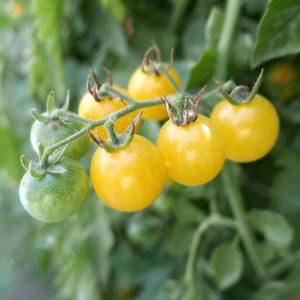
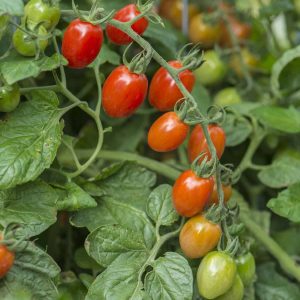
Color is more than aesthetics — it influences taste. Pink, yellow, and orange are milder-tasting than most red varieties. Contrary to popular belief, yellow tomatoes are not lower in acids. Rather, it is the balance of acids, sugars, and aromatics that distinguishes the taste of one tomato from another.
AAS has proven performers across the whole color spectrum: yellow/orange (Buffalosun F1, Apple Yellow F1, and Chef’s Choice Yellow F1), pink (Mountain Rouge F1, Pink Delicious F1 and Chef’s Choice Pink F1), dramatic dark tones (Chef’s Choice Black F1, the indigo Midnight Snack F1), and stunning stripes (Sunset Torch, Red Torch F1, Purple Zebra F1). For something truly unusual, Firefly F1 ripens to a pale white-yellow — a real conversation starter.


Step 4: Match Variety to Your Growing Conditions
For containers:
Tomatoes can also be grown in tubs or large patio containers. For best results, select a variety with a compact or determinate habit. The container needs to be at least 12 inches deep with drainage holes on the bottom. AAS container-suitable winners include Patio Choice Yellow F1, Red Racer F1, Early Resilience F1, and Celano F1.
For disease-prone gardens:
Look for resistance codes on the label — V (Verticillium Wilt), F (Fusarium Wilt), N (Nematodes), T (Tobacco Mosaic Virus). Purple Zebra has very high disease resistance, and the skin isn’t as thick as that of other striped varieties. Galahad F1, Mountain Merit F1, and Celebrity F1 also carry impressive resistance packages. Read more about Tomato Diseases and 7 Tips for Preventing Garden Diseases.
For short seasons:
Look for lower “days to maturity” numbers and start seeds early. Sow indoors about 6 weeks before the last expected frost date.
The Bottom Line
Choosing a tomato variety doesn’t have to be a gamble. AAS Winners have been tested across North America, evaluated against the best competitors on the market, and proven to outperform. Whether you’re squeezing containers onto a sunny balcony or tending rows in a full garden, there’s an AAS-winning tomato bred for your situation.
Browse the full searchable list at all-americaselections.org — then let the judges do the hard part so you can focus on the best part: eating them.
“This post is provided as an educational/inspirational service of All-America Selections. Please credit and link to All-America Selections when using all or parts of this article.”