Seeing hummingbirds in the garden is an enjoyable and memorable experience for everyone.
Giving them a reason to visit is easy by planting appropriate All-America Selections Winners in your landscapes. With 90% of the hummingbird diet consisting of nectar (the rest of the diet includes insects!), providing beautiful and appropriate plants can keep these amazing creatures busy in your garden.
Written by Mark Dwyer
Landscape Prescriptions by MD
Did you know…
Hummingbirds eat every 10-15 minutes and have to consume 50% of their body weight every day to keep up with their active metabolisms (heart rate can be over 1,000 beats per minute!). With wings beating up to 80 times per second, hummingbirds will visit between 1,000-2,000 flowers daily; from dawn until dusk. Hummingbirds can fly in any direction, including backwards. This will allow them to hover and check over a wide range of flowers very quickly. Tubular-shaped flowers are ideal for nectar retrieval due to the long bills and grooved tongues of hummingbirds. With 25 species native in the United States, providing a diverse amount of plant material as food sources for hummingbirds should result in exciting opportunities for visitation and observation.
With urban development, changes in land use and a warming climate, migration routes of hummingbirds and nectar availability are being compromised. Every AAS hummingbird-appropriate plant in our garden beds, containers and baskets can help keep the populations happy and healthy.


Hummingbird photos above courtesy of Marsha Mood
Some other prudent steps to consider when creating a hummingbird-friendly garden include the following:
- Consider the additional use of hummingbird feeders – keep them filled (twice per week), clean (weekly!) and protected from ants, bees and other uninvited guests. Multiple feeders should not be placed within sight of each other due to territorial conflicts
- Eliminate chemical use in your garden.
- Encourage neighbors to help expand “hummingbird-friendly” patches of diverse plantings.
- Include native plants which have appropriate nectar value but will also help attract the insect portion of the hummingbird diet!
- Expand your plant diversity in terms of variety but also in terms of the timing of the bloom period. Summer blooming perennials, woody plants and annuals can provide a hummingbird buffet!
- Space your hummingbird friendly plantings around the garden and provide individual plant spacing to allow for them to hover and navigate.
- A drip fountain or misting device will provide welcome moisture for hummingbirds and other wildlife.
AAS Winners for Hummingbirds

This plant has showy golden foliage, topped by blue flower clusters that feature smaller, tubular flowers that will be of great interest to hummingbirds and other pollinators. Hardy to zone 5.

This popular variety of summer snapdragon (15” tall) features stalks with individual, orchid-like blooms in profusion. Great in groupings or the container.

This compact (32” tall), seed-grown selection is perfect for the bed, border or container. Adding a tropical-look to the garden, the flowers are a hummingbird magnet!

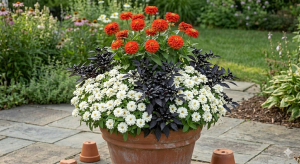
This excellent selection features a profusion of orange blossoms throughout the heat of summer. Cosmos, in general, are great for hummingbirds, bees and butterflies!

Nicotiana ‘Perfume Deep Purple’
This compact flowering tobacco features deep purple, trumpet-shaped blooms, fragrance and certain hummingbird appeal!

Penstemon barbatus ‘Twizzle Purple’
This first-year, flowering perennial (z 4-9) blooms profusely with vibrant purple, tubular blooms and offers welcome height (35” tall) in the border or container.

This hybrid selection is used as an annual or perennial (z 6-9) and features red and white, bi-color blooms and a height of 24”. This variety has demonstrated excellent garden performance in the sun and heat!.

Petunia Tidal Wave® Red Velour
This vigorous, continuously blooming petunia features deep, velvety red blooms (non-fading) in profusion. All AAS Winning petunias are appropriate for hummingbirds!

Salvia ‘Summer Jewel™ Red/Pink/Lavender’
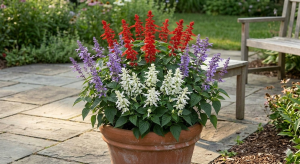
This florific series of scarlet sage (S. coccinea) is a slam dunk for hummingbirds. Individual, trumpet-shaped blooms on a central stalk will be visited in earnest on these heat-tolerant gems.

Offering a beautiful, dark violet-blue flower stalk, this mealycup sage (Salvia farinacea) will attract bees, butterflies and certainly hummingbirds. This selection is great in groupings or as an accent.

This Mexican sunflower (60”+ in height) will offer bright orange blooms from mid-summer until frost and will attract a wide range of butterflies and is a hummingbird favorite. Look for ‘Fiesta del Sol’ for a more compact form (36” in height).

Zinnias love the sun and heat and this compact, mildew-resistant variety will be both beautiful and functional in the garden as a “pollinator magnet”!
 Tubular shaped flowers work the best to attract hummingbirds. The long beak of the hummingbird can easily get to the food.
“This post is provided as an education/inspirational service of All-America Selections. Please credit and link to All-America Selections when using all or parts of this article.”.